The best locations for stargazing near Breckenridge Colorado include high altitude spots such as Hoosier Pass, Sapphire Point Overlook, and the nearby dark sky communities of Alma and South Park. These areas offer minimal light pollution and clear views of the Milky Way; travelers can also find guided astronomy tours at local resorts or public observation sites like Discovery Hill.
Most visitors travel to the mountains to escape urban noise, yet they often find that the ambient glow of downtown Breckenridge still obscures the most breathtaking celestial wonders. It is a common frustration to stand beneath a vast sky and see only a handful of stars when a true cosmic masterpiece is waiting just minutes away. At Bearview Lodge, we believe that high altitude clarity is a luxury that should be fully experienced. This guide details how to find the darkest skies in Alma and South Park, including the significance of local Dark Sky certifications and the 360 degree views at Hoosier Pass. You will learn the best dates to view the Milky Way in 2026, the essential gear required for cold nights, and how to enjoy world class stargazing without ever leaving our private deck.
Why Stargazing near Breckenridge Colorado is a World Class Experience
In August 2025, Breckenridge earned its official designation as a Certified Dark Sky Community, the first mountain resort community in Colorado to do so. This milestone reflects significant local efforts to mitigate light pollution through strict exterior lighting regulations. However, for those seeking the most profound celestial clarity, the true high-altitude sanctuaries lie just a few miles south in Alma and the South Park basin.
The atmosphere acts as a natural filter. The more of it you can get above, the sharper the stars appear. At Bearview Lodge, guests reside at an elevation of 10,578 feet, providing a distinct physical advantage over lower valley locations. The air here is thinner and contains significantly less moisture and particulate matter. This reduction in atmospheric distortion is exactly why stargazing near Breckenridge Colorado becomes a world-class experience once you move into the higher terrain surrounding Alma.
Professional photographers and astronomers prioritize these specific conditions because they offer better contrast and less scintillation, or twinkling, of the stars. While the resort town provides excellent educational tours, the raw, unobstructed view of the Milky Way is best experienced from the quiet, dark ridges of Park County. Bearview Lodge provides premier accommodations for up to 10 guests who want to combine these technical viewing advantages with a luxury basecamp.
Understanding the Breckenridge Dark Sky Community Certification
Is Breckenridge a dark sky community? As of August 2025, the town officially holds this designation from DarkSky International. This certification recognizes communities that show exceptional dedication to preserving the night sky through implementation and enforcement of quality lighting codes. For Breckenridge, this involved transitioning municipal streetlights to warm-toned LEDs, requiring residential down-shielding, and establishing strict curfews for commercial exterior lighting. These technical changes are designed to reduce skyglow, which is the haze of light that obscures the stars.
While these efforts significantly improve stargazing near Breckenridge Colorado, their greatest impact for serious observers is the creation of a massive dark sky buffer. By curbing light at the source, the town prevents light pollution from bleeding into the high-altitude basins to the south. This makes the transition over Hoosier Pass into Alma even more dramatic. For guests who How to Plan a Breckenridge Ski Trip Without Staying in Town, this means you are positioned in a region where the town’s mitigation efforts meet the naturally low light levels of the Pike National Forest. The result is a viewing environment where the celestial clarity is preserved by law and enhanced by elevation.
Hoosier Pass Stargazing: A 360 Degree Celestial Theater
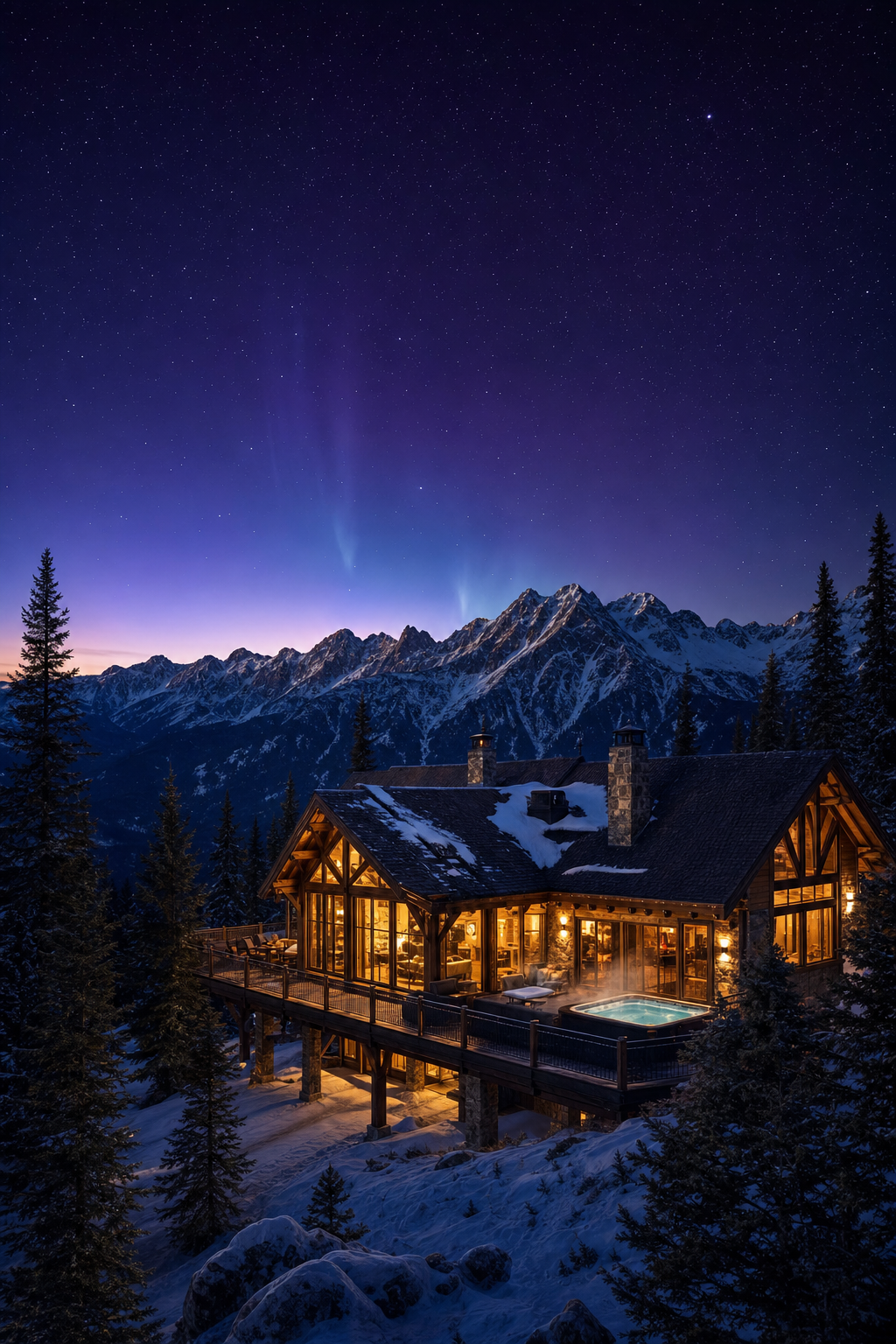
Hoosier Pass stands at 11,503 feet, serving as the physical high point where the Continental Divide meets the celestial sphere. For those prioritizing Milky Way photography or wide field observation, this summit is the premier location for stargazing near Breckenridge Colorado. The primary technical advantage here is the 360 degree unobstructed horizon. Unlike the deeper valleys where steep ridges cut off the lower portions of the sky, the pass allows you to track the galactic core from the moment it rises over the jagged peaks of the Tenmile Range.
Access to this high altitude theater is remarkably straightforward. From the center of Breckenridge, travel south on Highway 9 for approximately 20 minutes. If you are staying at Bearview Lodge, the drive is even more convenient; a 10 minute journey north from Alma brings you directly to the summit parking area. This proximity allows guests at our premier accommodations for up to 10 guests to reach professional grade dark skies and return to the warmth of the lodge in under fifteen minutes.
While the main summit parking lot is the most accessible, it can occasionally be affected by light from passing vehicles on Highway 9. For those seeking a slightly more secluded alternative with even lower light pollution, the Dickey Day Use Area nearby provides a quieter vantage point. At this altitude, the sheer density of stars can be disorienting to the naked eye. The Milky Way appears not just as a faint cloud, but as a complex structure of dust lanes and stellar nurseries, a level of detail rarely visible at lower elevations.
The Best Time to See the Milky Way in Colorado 2026
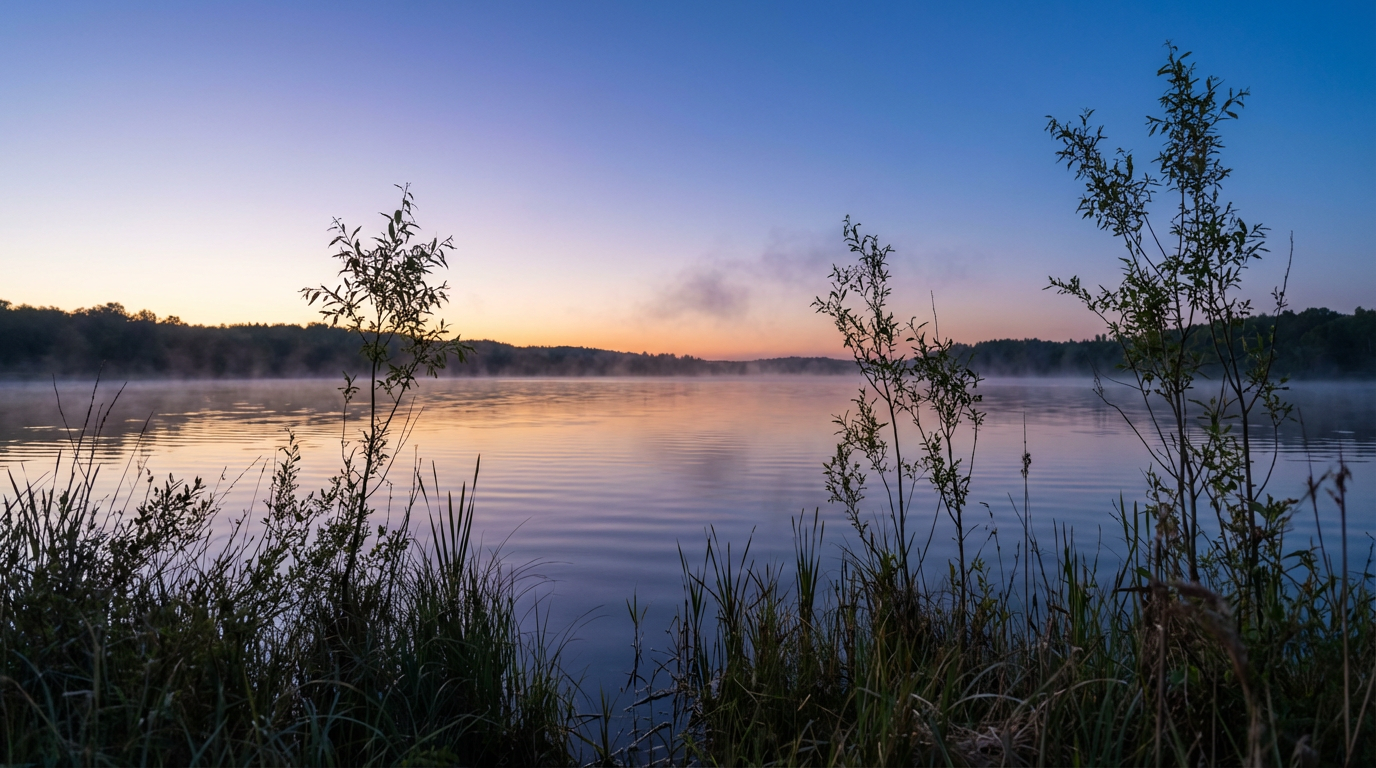
Milky Way season in Colorado officially spans from late February through October. During the early spring, the galactic core is only visible in the hours just before dawn. For the most convenient viewing while stargazing near Breckenridge Colorado, the 2026 calendar highlights late summer and fall as the premier months. During August, September, and October, the dense center of the galaxy reaches its highest point in the southern sky during the early evening, providing a brilliant display against the jagged silhouette of the Collegiate Peaks.
Successful observation requires planning around the lunar cycle. You should aim for the window three days before or after a New Moon. The absence of moonlight is essential for seeing the intricate dust lanes and nebulae within the Milky Way. Digital tools like PhotoPills or SkySafari are indispensable for predicting exactly when the galactic core will align with local topography.
At an elevation of 10,578 feet, the transition from the Blue Hour to astronomical dusk occurs with remarkable speed. Unlike lower valleys where moisture and particulate matter trap light, the thin air here allows the sky to reach total darkness quickly. This creates a high-contrast environment where the stars appear as distinct, sharp points of light rather than blurred clusters. For those staying in premier accommodations for up to 10 guests, this atmospheric clarity provides a professional grade viewing window that begins shortly after the sun disappears.
Top Spots for Night Sky Viewing in South Park and Alma
While spots like Sapphire Point or Carter Park are popular for stargazing near Breckenridge Colorado, they often suffer from the persistent glow of the I-70 corridor and local traffic. To find truly unpolluted skies, you must head deeper into the South Park basin and the glacial valleys surrounding Alma. These locations offer a level of silence and darkness that resort-side overlooks simply cannot match.
Kite Lake Trailhead serves as a premier destination for high-altitude observation. Located at 12,000 feet at the base for hiking the famous 14ers of the Decalibron Loop, this site provides a unique mountain enclosure effect. The towering peaks of Mount Democrat and Mount Cameron physically block peripheral light, creating a natural dark-sky bowl where the only light source is the celestial sphere above. This is where the air is thinnest and the contrast is sharpest.
For photographers seeking architectural reflections, Montgomery Reservoir is the optimal choice. On calm nights, the alpine water acts as a mirror for the stars, framed by the rugged silhouette of the Lincoln Falls area. If your goal is capturing wide-horizon shots or the full arc of the Milky Way, the salt flats near Fairplay offer an expansive, flat foreground that is rare in the high Rockies.
Location | Elevation | Key Advantage | Best For |
|---|---|---|---|
Kite Lake | 12,000 ft | Total mountain enclosure | Zenith viewing and low light pollution |
Montgomery Reservoir | 10,800 ft | Still water reflections | Long-exposure photography |
Fairplay Salt Flats | 9,900 ft | 360-degree horizon | Galactic arc panoramas |
Choosing premier accommodations for up to 10 guests in Alma places you within a 15 minute drive of these technical viewing sites, ensuring you spend more time under the stars than in transit.
Stargazing from the Deck: The Bearview Lodge Experience
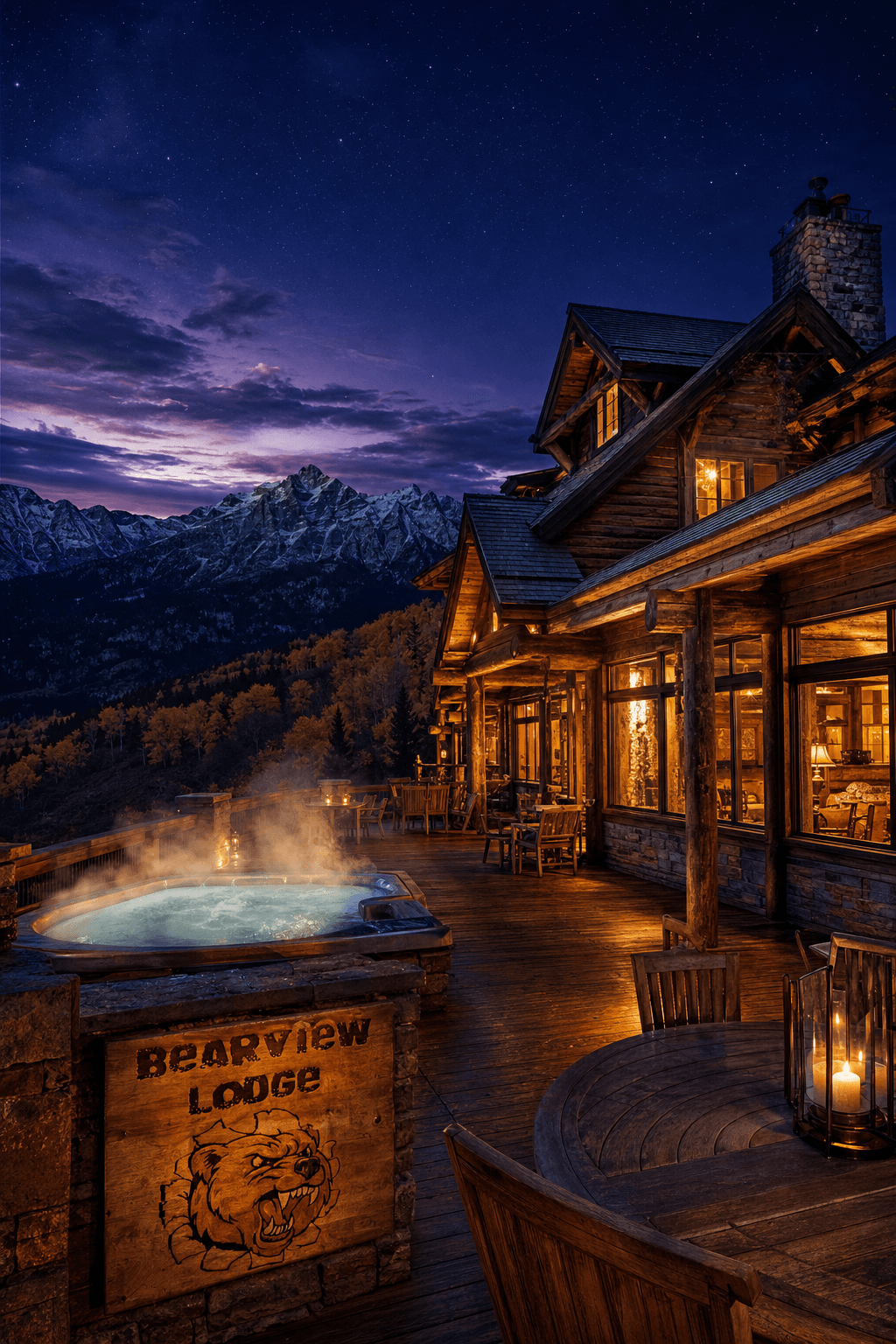
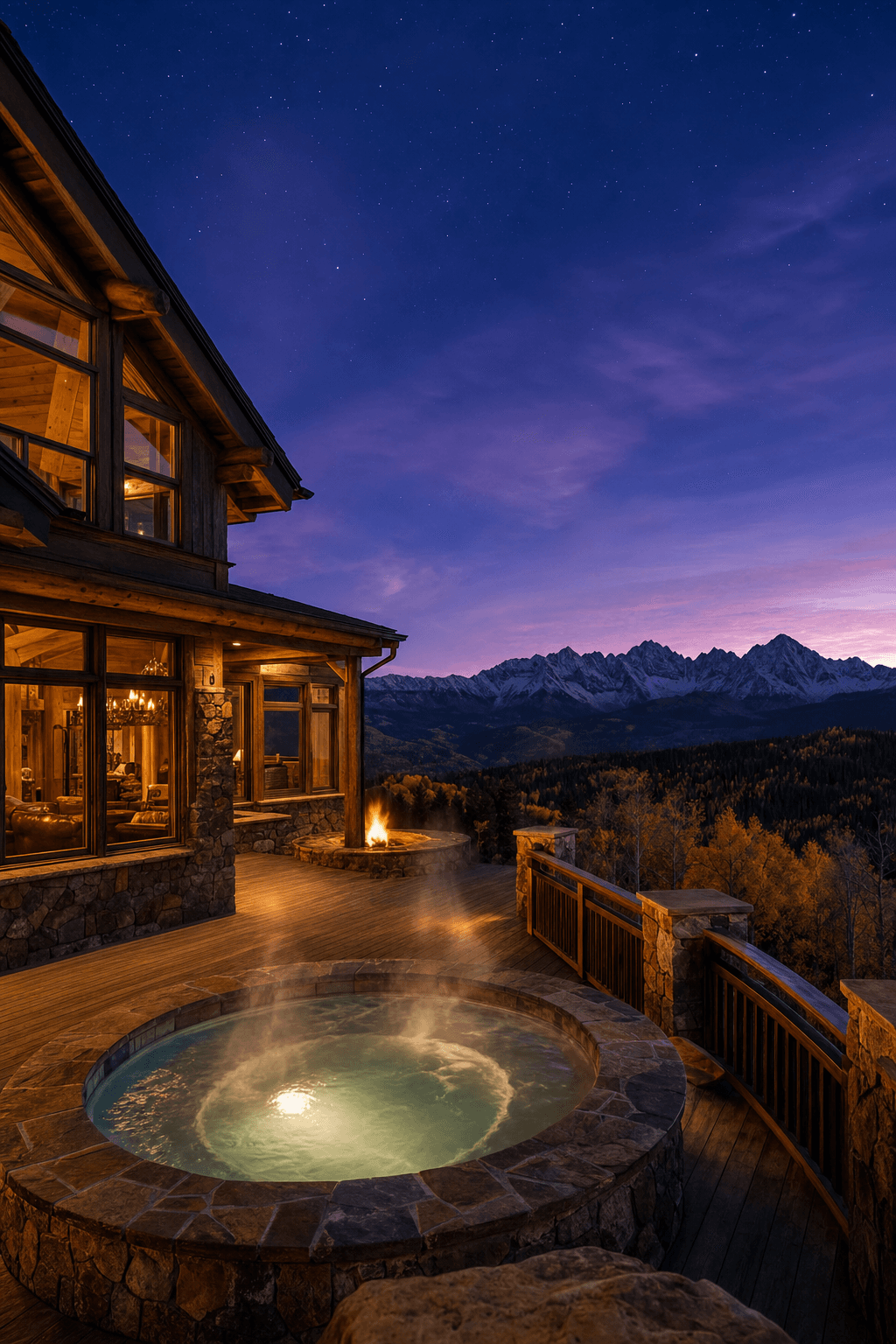
While exploring high-altitude trails is rewarding, the most consistent way to experience stargazing near Breckenridge Colorado is from the privacy of Bearview Lodge. Our 1,000 sq. ft. wrap-around deck functions as a dedicated, high-altitude observatory. At 10,578 feet, you are positioned above the atmospheric haze and artificial light found in the resort valleys. Many organized town-based tours operate at significantly lower elevations; here, you have professional-grade clarity just steps from your living room.
Submerging in the private hot tub while the silhouettes of the Collegiate Peaks stand against a vivid Milky Way offers a distinct mountain luxury. The deck provides ample physical space for multiple tripods and telescopes, allowing serious observers to run long-exposure sequences throughout the night. These premier accommodations for up to 10 guests provide a controlled environment where you can step inside to check data or grab a warm drink without losing your night vision to bright streetlights. The quiet of the surrounding forest ensures that the environment remains immersive and distraction-free. You get the same raw celestial density found at the Kite Lake trailhead, with the added benefit of immediate access to modern comforts.
Essential Gear for High Altitude Stargazing
Maximizing the clarity provided by high-altitude skies requires proper preparation for the local climate. Thermal management is the most critical factor for a successful night. Even during the peak of summer, temperatures in Alma frequently drop to near-freezing after dusk. Effective layering should include a moisture-wicking wool base, a heavy down mid-layer, and a wind-resistant outer shell. Do not overlook insulated footwear and gloves; standing still on a deck or trailhead for long periods leads to rapid heat loss through the extremities.
Maintaining night vision is another technical necessity. Use a headlamp with a dedicated red-light mode for all navigation and gear adjustments. White light instantly resets your dark adaptation, requiring another 20 to 30 minutes for your eyes to regain their sensitivity to faint starlight. For those capturing the sky, a heavy-duty, weighted tripod is non-negotiable. High-altitude gusts can easily cause motion blur in long-exposure shots on lightweight travel tripods.
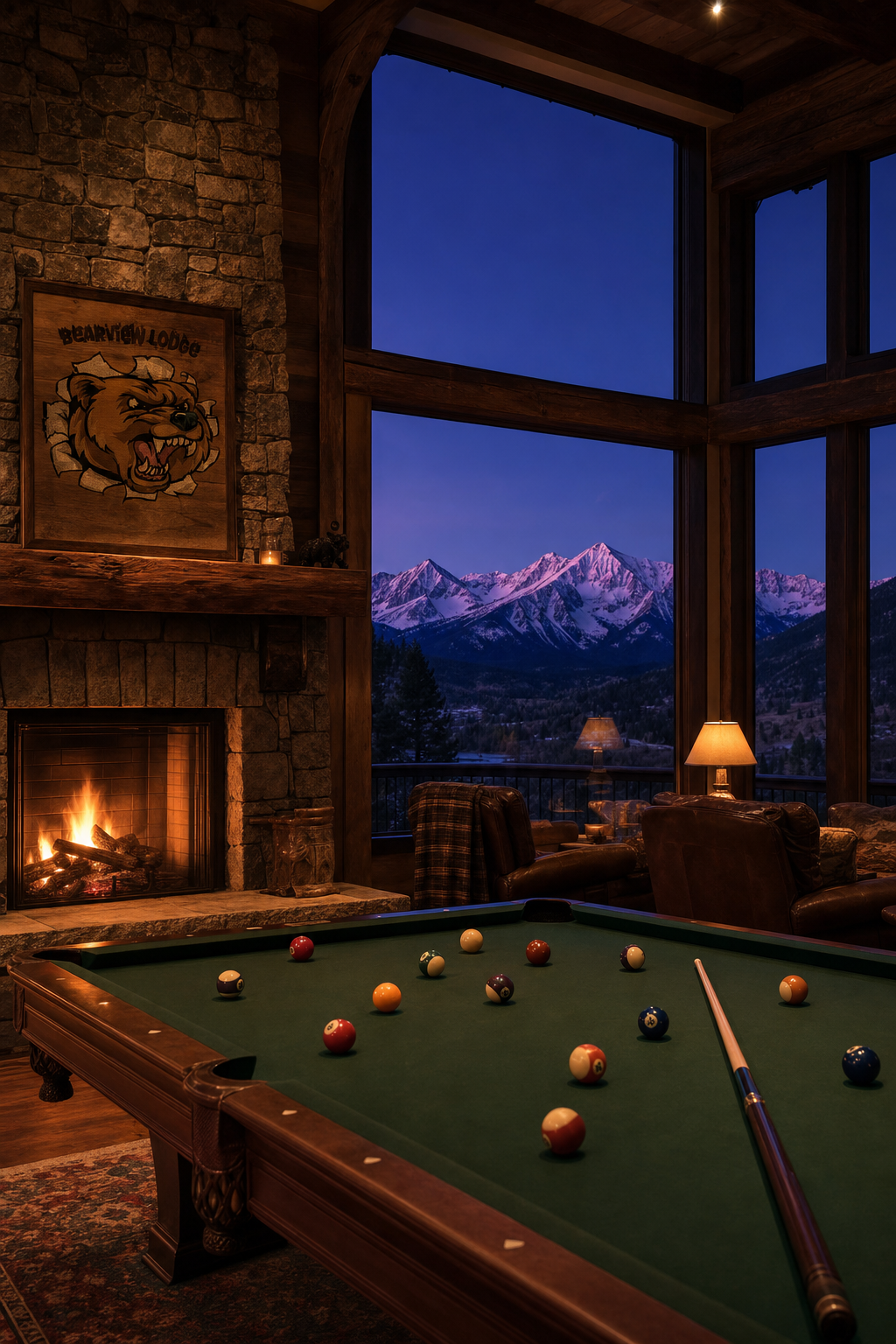
These premier accommodations for up to 10 guests serve as the ultimate staging area for stargazing near Breckenridge Colorado. The lodge's full game room functions as a comfortable warming hut where you can recalibrate equipment or review shots between sessions. This allows your group to cycle through outdoor viewing periods without enduring the cold for hours at a time.